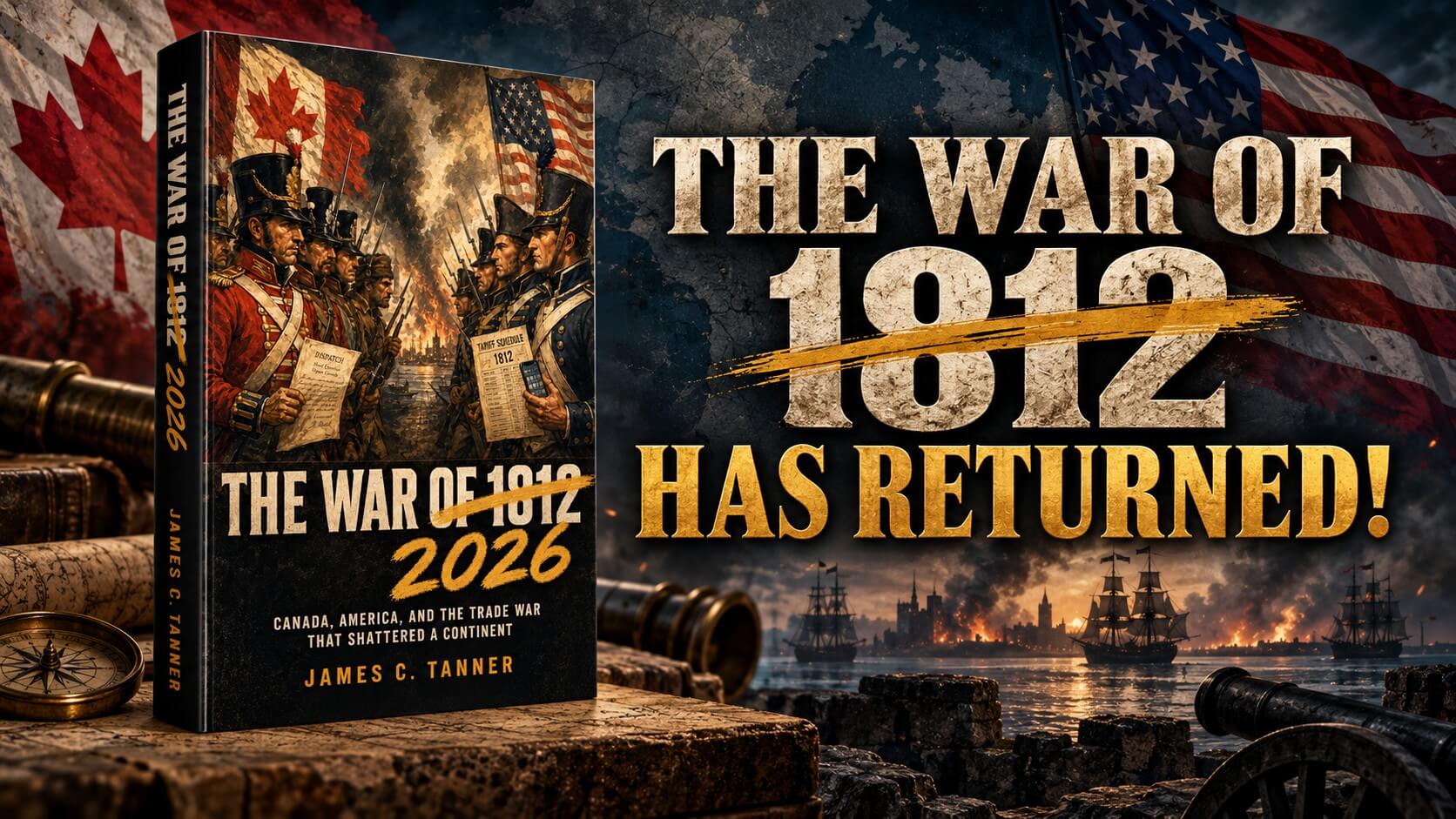
The War of 2026
The War of 2026 did not begin with soldiers. It did not begin with a declaration, a treaty violation, or a shot fired across a border. The War of 2026 began with a tariff — and like most economic conflicts that escalate beyond anyone’s original intention, it began with the assumption that the other side would back down first.
They didn’t.
What followed became one of the most consequential trade conflicts in North American history — a collision between two economies so deeply integrated that punishing one meant punishing both, and yet neither side could find an off-ramp that didn’t require someone to lose face publicly.
The War of 2026 is still being written. But enough has happened — and enough of the pattern is now visible — that it is possible to document what occurred, explain why it was predictable, and assess what it will cost the continent before the final chapter is finished.
What Triggered The War of 2026?
The War of 2026 escalated rapidly in August of that year. Three days of trade talks in Washington collapsed without resolution. Within hours of those talks ending, American tariffs of 50 percent were imposed on Canadian cement, building materials, liquor, and hockey equipment — roughly $20 billion US in goods.
By Saturday morning, the response had come. Matching tariffs hit American steel, dairy, appliances, agricultural equipment, and electronics — dollar for dollar.
Two of the closest trading partners on earth were now taxing their own citizens for the privilege of punishing each other.
The War of 2026 had officially begun.
Why The War of 2026 Was Predictable
The War of 2026 did not emerge from nowhere. Students of economic history will recognize the pattern immediately — because it has happened before, almost word for word, more than two centuries ago.
The War of 1812 did not begin with soldiers either. It began with a trade policy — the Embargo Act — one so badly designed that it devastated the country that wrote it far more than the country it was aimed at. American exports collapsed 87 percent in twelve months. New England was gutted. Ships sat idle. Merchant houses that had operated for generations went bankrupt in a single season.
Britain adjusted and moved on. America bled.
The War of 2026 follows the same structural logic. Economic coercion builds momentum that outruns the facts. By the time anyone checks whether the original grievance still exists, the answer has stopped mattering. The conflict has taken on a life of its own — driven by political identity, public perception, and the unwillingness of either side to be seen as the one that blinked.
History did not repeat itself in 2026. But it rhymed loudly enough that anyone paying attention should have heard it coming.
What Makes The War of 2026 Different From 1812
The War of 2026 is not simply a modern replay of an old conflict. There are four factors that make it significantly more dangerous than its historical predecessor.
The two economies are built into each other.
In 1812 the two economies traded with each other. In 2026 they are constructed around each other. Components cross the border repeatedly before a finished product exists. A tariff in The War of 2026 does not touch a product once — it touches it at every crossing, and the cost compounds with each pass. The damage is not linear. It is exponential.
Alternatives exist that didn’t exist before.
In 1812 there were limited alternatives to American trade. In The War of 2026 alternatives are not only available — they are being actively pursued. A growing majority of people on one side of the border now view a major Asian power as a more reliable trading partner. The European Union has begun fast-tracking a trade framework that had previously been set aside. The pivot is already underway, and pivots of that scale do not reverse easily.
Allies are watching and drawing conclusions.
The War of 2026 is not being observed in isolation. Much of the world is now describing the United States as a large country that uses economic size as a weapon against smaller neighbors. That perception does not stay contained to one bilateral relationship. It spreads. It affects alliances, investment decisions, and the willingness of other nations to depend on American commitments.
The political identity of the conflict’s architect is woven into the strategy.
In The War of 2026 the tariff strategy and the political identity of the sitting president have become inseparable in public perception. That means the off-ramp requires someone to lose face — and neither side has shown the willingness to go first. The conflict is no longer just economic. It is personal, political, and deeply entrenched.
The Human Cost of The War of 2026
The War of 2026 is not an abstraction. It is arriving quietly in the form of invoices 30 percent higher than last quarter. Hiring freezes. Contractor bids that no longer win because the materials cost too much. Small businesses on both sides of the border absorbing costs they cannot pass on and cannot absorb indefinitely.
The people most affected by The War of 2026 are not the policymakers who designed the tariffs. They are the manufacturers, the farmers, the contractors, the retailers, and the families who depend on them. They are the ones paying the price for a conflict they did not start and cannot end.
This is how economic wars have always worked. The weapons are percentages on paper. The casualties are livelihoods.
What Comes Next After The War of 2026
Predicting the resolution of The War of 2026 with certainty is not possible. What is possible is identifying the range of outcomes that the evidence supports.
In the optimistic scenario the conflict de-escalates through quiet diplomatic back-channels before the structural damage becomes permanent. Both sides claim enough of a win to satisfy their domestic audiences. Trade flows normalize over 18 to 24 months. The damage is real but recoverable.
In the middle scenario the conflict continues long enough that the alternative trade relationships being built become self-sustaining. The pivot away from American trade dependency becomes structural rather than tactical. Even when the tariffs eventually come down the trade patterns that replaced them do not fully reverse. The economic relationship between the two countries is permanently altered — not destroyed, but diminished.
In the pessimistic scenario the conflict escalates further before it de-escalates. Additional sectors get drawn in. The political pressure on both sides intensifies. The economic damage reaches a threshold where recovery takes a generation rather than a business cycle.
The War of 2026 is still being written. Which scenario it resolves into depends on decisions that have not yet been made by people who have not yet made them.
The War of 1812 Ended Without Resolving Its Grievances
There is one final historical parallel worth noting about The War of 2026 — and it is the most sobering one.
The War of 1812 ended without resolving the grievances that caused it. The Treaty of Ghent restored the pre-war status quo. No territory changed hands. No reparations were paid. The underlying tensions — over trade, sovereignty, and the assumption that economic pressure could be used as a weapon without consequence — were never addressed.
Those grievances waited two centuries.
They came back in The War of 2026.
The question worth asking now is not just how The War of 2026 ends. It is what grievances it leaves unresolved — and how long those will wait before they return.
Read The Definitive Account of The War of 2026
James C. Tanner has documented The War of 2026 in full — what happened, why it was predictable, what it will cost, and what the continent looks like when it is over. His book, The War of 2026: Canada, America, and the Trade War That Shattered a Continent, takes no political side. It sources every claim. It states conflicts in the data rather than resolving them in favor of a preferred number.
It is, however, a book with an argument — that what is happening is not a negotiation that went sideways. It is a pattern, documented and repeatable, in which economic coercion builds momentum that outruns the facts.
Purchase the ebook today for $9.99 and receive a free bonus copy of The Rise and Fall of America — both delivered instantly as downloads.
Get The War of 2026 — $9.99 + Free Bonus
Paperback available on Amazon: The War of 2026 on Amazon
Published by Calico GOLD Books — a division of Calico GOLD Publishing.